
September 3, 2026
Four emerging professionals shaping the future of Kentucky accounting
Amelia Hammond: From the cockpit to a career in accounting
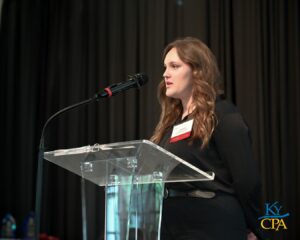 Amelia Hammond's career interests may seem to span two very different worlds: aviation and accounting. An incoming accounting and finance student at the University of Kentucky, Hammond is also a student pilot who has completed her first solo flight and is working toward her private pilot's license.
Her interest in accounting began in high school when an exceptional teacher, April Smith, introduced her students to opportunities beyond the classroom. Through visits with accounting firms, networking opportunities and presentations from professionals, Hammond began seeing accounting as a career rather than simply a subject.
Those experiences eventually led to a high school internship with Dean Dorton's Command Center, where Hammond gained firsthand experience working alongside accounting and finance professionals.
“The clarity I have in my future is possible because of the doors leaders like you opened for me when I was still in high school,” Hammond said when addressing KyCPA Leadership Luncheon attendees June 12, 2026.
Today, she hopes to combine her interests by pursuing a career in accounting or finance within the aviation industry. She also hopes her experience encourages other students to explore accounting earlier.
“Your next star intern—or your future CFO—is sitting in a classroom right now, waiting for a sign that their goals are achievable,” she said.
Tucker Conway: Building a career through connections
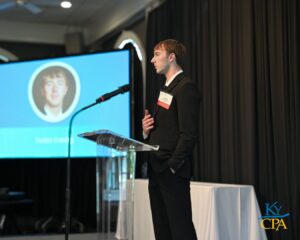 For Tucker Conway, accounting stood out as a career where he could combine his interest in numbers and problem-solving with his desire to serve others.
The Ashland native recently graduated with honors from Morehead State University, earning a bachelor's degree in business administration with a focus in accounting in just three years. During college, he completed three tax internships while also staying involved on campus, serving as a KHSAA-certified basketball referee and remaining active in his church and community.
His involvement with KyCPA began with CAP U in fall 2025. The experience introduced him to employers and professionals from across Kentucky and ultimately helped him connect with Kelley Galloway Smith Goolsby, PSC, where he secured a position before graduating.
Conway describes KyCPA as more than an organization.
“KyCPA is more than just events, activities, and a Society, but rather they are a strong team, community, and professionals who support, motivate and connect students across the state of Kentucky.”
As he begins his career, Conway says one of his goals is to continue learning while helping those around him become better professionals and people. For him, success isn't defined by a job title.
Eric Chew: Turning opportunity into a commitment to give back
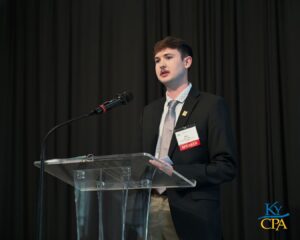 Eric Chew's experience with KyCPA has followed a similar path—from student opportunities to professional development and now to a desire to help others.
A past KyCPA Educational Foundation scholarship recipient and former Student Ambassador, Chew recently graduated from college and is now a staff accountant at Henderman, Jessee & Company, PLLC. His involvement gave him opportunities to build relationships while also learning more about the profession and the role a professional organization can play in supporting students.
“Being a Student Ambassador didn't just teach me how to network. It showed me the real value KyCPA brings to students.”
For Chew, that lesson has continued into his professional career. He sees professional organizations as an important connection between education, the profession and public policy.
“Professional organizations like KyCPA aren't just nice to have. They're the bridge between what happens in classrooms and what happens in legislatures.”
Now, as he begins his own career, Chew wants to become part of that bridge for the next generation.
“Earning my CPA is just the start. Being a Student Ambassador showed me what the KyCPA and its members do for students, and so many of them pushed me forward along the way. Now I want to do the same for others.”
Nora Reader: From student opportunities to a career at Churchill Downs
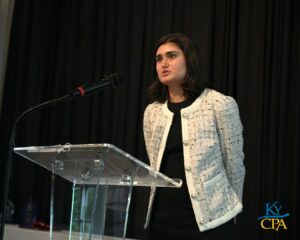 Nora Reader, a Louisville native and recent Transylvania University graduate, discovered that accounting offered much more than working with numbers. Her coursework showed her how accounting helps organizations make informed decisions, operate responsibly and plan for the future.
Her KyCPA involvement began with Interview Day. As a student at a small university, the prospect of pursuing internships and professional opportunities was intimidating. Interview Day gave her the opportunity to connect directly with employers, strengthen her communication skills and gain confidence—and ultimately led to an internship that helped confirm accounting was the right career for her.
Reader also participated in CAP U, Women on the Rise and other networking opportunities. She served as a Student Ambassador and received a KyCPA scholarship, experiences she says provided both practical support and encouragement.
Now beginning her career with Churchill Downs Incorporated, Reader is studying for the CPA exams and working toward licensure. Long term, she hopes to move into leadership and eventually mentor future accounting students and young professionals.
“When I think about my professional growth over the past several years, KyCPA has been a constant presence,” Reader said. “Through networking opportunities, leadership experiences, career development programs, scholarships, and mentorship, the organization has helped bridge the gap between being a student and becoming a professional.”
A profession built one connection at a time
Amelia, Tucker, Eric and Nora have taken different routes into accounting, but their experiences share a common thread: someone opened a door, and they stepped through it.
A teacher introduced Amelia to the possibilities of accounting. KyCPA connected Tucker with employers. A scholarship and Student Ambassador experience helped Eric discover the value of giving back. Interview Day and professional development opportunities gave Nora the confidence to take her next steps.
Now, each is carrying those experiences forward in a different way.
Their stories are a reminder that the accounting profession is not simply built through degrees, exams and licenses. It is built through people—teachers who encourage students, professionals who make introductions, employers who provide opportunities and young professionals who eventually turn around and open the door for someone else.
For this next generation of Kentucky accounting professionals, the journey is just beginning. And, as Eric Chew put it, earning the CPA is only the start.